
When Fluoride Treatment Helps and What to Check First
Compare fluoride varnish, gel, and prescription products, with age-specific guidance, exact-product aftercare, and questions about fees and insurance coverage.
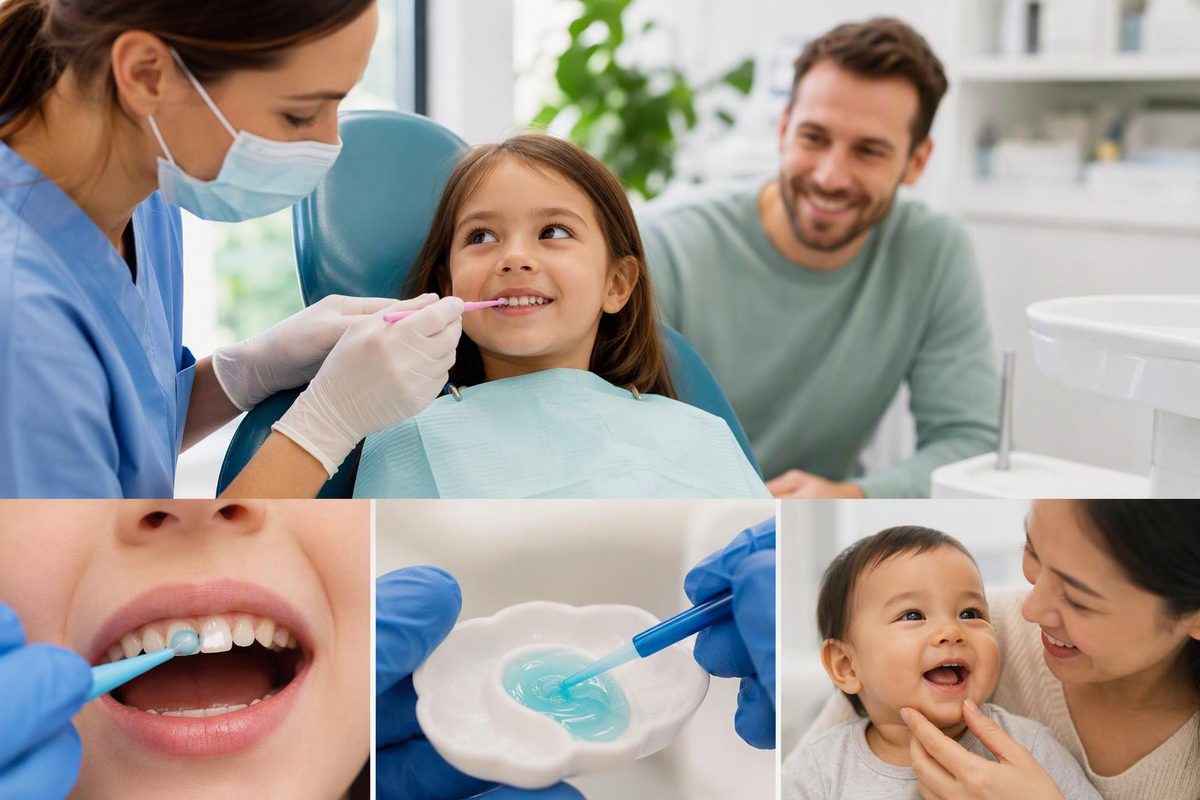
Fluoride treatment applies concentrated fluoride to teeth to help prevent cavities and reverse early mineral loss. It can benefit children and adults, but an in-office application is not automatically necessary at every adult cleaning. Before agreeing, ask why you need it, which product will be used, and what you will pay.
Choose the patient’s age and assessed cavity risk to see which recommendation applies.
Check Which Guidance Applies
Ask for a Cavity-Risk Assessment
An in-office application is not automatically needed at every adult cleaning. Ask which findings support the recommendation; unknown risk is not low risk.
Adult recommendations in the ADA's 2013 guide are based on expert opinion. Confirm the product, fee, and reassessment plan.
Age and Risk Rules Used
Under 5: The USPSTF's 2021 recommendation advises primary care clinicians to apply varnish from first baby-tooth eruption until age five, regardless of assessed risk.
Under 6: The ADA recommends only 2.26% fluoride varnish among the professionally applied and prescription-strength options it assessed. This identifies the product option, not an automatic need at every visit.
Elevated risk: The ADA's 2013 guide recommends 2.26% fluoride varnish at least every three to six months. Adult recommendations are based on expert opinion.
Low risk: The ADA guide says additional topical fluoride may not be needed beyond over-the-counter fluoride toothpaste and fluoridated water.
Sources: ADA 2013 topical-fluoride guide and guideline; USPSTF 2021 recommendation, linked in the article. This tool matches guidance, not a diagnosis.
Fluoride Can Reverse Early Decay, Not Rebuild a Hole
Fluoride helps replace minerals lost from enamel, the hard outer surface of a tooth, making it more resistant to acids that cause decay. Both children and adults can benefit, according to the National Institute of Dental and Craniofacial Research.
The distinction is between early decay and a physical hole. Fluoride can help reverse early decay before enamel breaks down. It does not rebuild missing tooth structure; dentists commonly restore a cavity with a filling. NIDCR explains this treatment distinction.
Ask whether the proposed application is prevention, treatment of an early lesion, or an addition to a needed repair. Those are different treatment goals.
Varnish, Gel, and Prescription Products Are Different Treatments
“Fluoride treatment” can describe several products. Find out which one is on your treatment plan before comparing benefits or following aftercare instructions.
| Product | How It Is Used | What to Clarify |
|---|---|---|
| Varnish | Painted directly onto teeth | Exact brand and aftercare |
| In-office gel | Concentrated application | Product-specific application time |
| Prescription toothpaste, gel, or rinse | Used at home as prescribed | Dose and schedule |
Varnish sets on contact with saliva and keeps fluoride against the tooth surface for several hours. The coating is temporary. For in-office gels, the ADA describes application times of approximately one to four minutes, depending on the product.
Prescription toothpaste, gel, or rinse is a higher-strength home treatment—not an interchangeable substitute for ordinary toothpaste. Follow the prescriber’s instructions.
These treatments also differ from the fluoride-containing polishing paste used during some cleanings. That paste is not an adequate substitute for varnish or gel in someone at high cavity risk. The ADA’s fluoride overview explains these distinctions, along with fluoride safety and home-use precautions.
Silver diamine fluoride (SDF) needs a separate consent discussion. The ADA describes its use to control existing decay and its potential to blacken treated decayed areas. If SDF is on the treatment plan, read our comparison of SDF and fillings for baby teeth before consenting.
Adult Recommendations Should Follow Cavity Risk
For adults and older children, the recommendation should connect to an assessment of cavity risk rather than simply the date of the next cleaning. Factors worth discussing include cavities within the past year, medication-related or other dry mouth, exposed roots from gum recession, and frequent sugary foods or drinks.
Difficulty cleaning teeth—including during orthodontic treatment—limited fluoride exposure, and irregular dental care also belong in that assessment.
The ADA’s 2013 chairside guide lists these risk factors and recommends 2.26% fluoride varnish at least every three to six months for elevated-risk patients. It also says low-risk patients may not need additional topical fluoride beyond over-the-counter fluoride toothpaste and fluoridated water.
Adult recommendations in that guide are based on expert opinion. Ask which findings support your dentist’s recommendation and when the need will be reassessed. An unknown risk level is not the same as a low one.
Our guide to discussing cavity risk before fluoride varnish offers a more focused adult consultation checklist.
Young Children Have Separate Age-Specific Guidance
In its 2021 recommendation, the U.S. Preventive Services Task Force advises primary care clinicians to apply varnish to all children’s baby teeth from first tooth eruption until age five. This is a broader preventive recommendation, not one limited to children already identified as high risk.
Separately, the ADA’s topical-fluoride guideline recommends only 2.26% fluoride varnish among the professionally applied and prescription-strength options it assessed for children younger than six.
These recommendations have different scopes. The USPSTF recommendation addresses primary care and children younger than five; the ADA product recommendation covers children younger than six. Neither makes every fluoride product interchangeable for a young child.
Aftercare Depends on the Exact Product
Get instructions for the product used. A universal “wait 30 minutes” rule does not cover every fluoride treatment.
For example, the manufacturer’s Nupro White Varnish patient instructions say to:
- Avoid brushing or flossing the treated area for at least two hours.
- Avoid hard, hot, or sticky foods, hot drinks, and alcohol-containing products for two hours.
- Avoid other fluoride products listed in the instructions until the next day.
Those timings apply to that product; they are not instructions for every varnish or gel. Before leaving, confirm when you can eat, drink, brush, floss, and resume any prescription fluoride product. Ask for written instructions if the office’s advice is difficult to remember.
Safe Use Includes Controlling Swallowed Fluoride
The ADA considers fluoride safe and effective when used as directed. A specific concern for children is dental fluorosis—changes in developing enamel caused by excess fluoride ingestion over time. Its fluoride overview reports no published evidence that professionally applied fluoride varnish is a risk factor for fluorosis.
For home brushing, the ADA recommends a rice-grain-sized smear of fluoride toothpaste under age three and no more than a pea-sized amount from ages three to six. Supervise children’s brushing. Do not add fluoride supplements without a prescription and a review of water and other fluoride sources.
An office application does not replace daily care. NIDCR recommends brushing twice a day with fluoride toothpaste and regularly cleaning between teeth.
Confirm the Separate Fee and Your Plan’s Limits
There is no treatment price supplied by the sources used here. Ask the office to identify the fluoride charge separately from the exam and cleaning, and get the amount before application.
The payment discussion should sit alongside the clinical one:
| Ask About | Question to Use |
|---|---|
| Clinical reason | What makes my cavity risk high enough to recommend this? |
| Repeat treatment | How often would we repeat it, and when will you reassess? |
| Home alternatives | Would a prescription product be appropriate instead of, or alongside, varnish? |
| Your charge | What will I owe if insurance does not pay? |
In the U.S., coverage is plan-specific. In its 2024 provider guidance, Delta Dental describes differing age limits and directs offices to check individual benefits.
Verify your current plan’s age limit, covered frequency, and remaining eligibility. A preventive service is not necessarily free, and a lack of coverage does not establish that treatment is clinically unnecessary.