
When to Brush Around Whitening Strips—and Why the Label Comes First
Brush gently earlier, then wait about 30 minutes before applying. After removal, rinse and let the product label and your comfort decide when to brush.
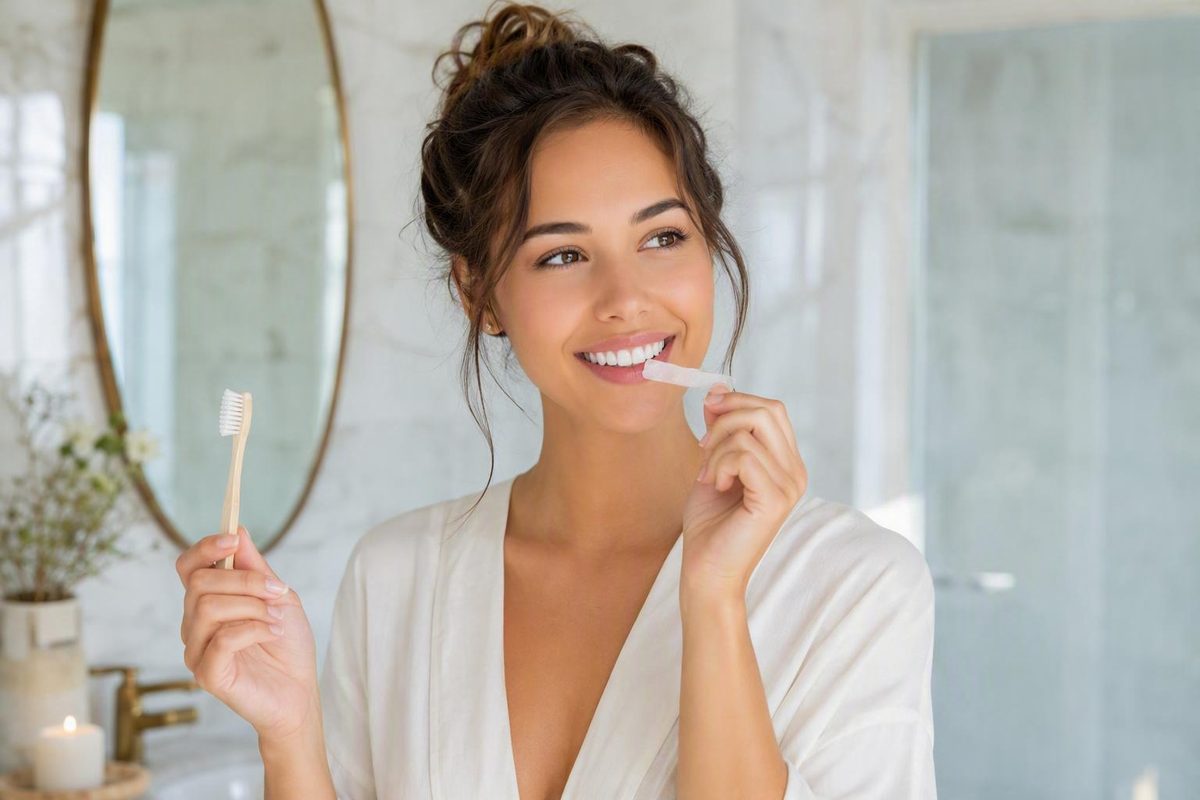
The short answer: brush earlier, not right before
If you are deciding whether to use white strips before or after brushing your teeth, the most practical general answer is:
Brush gently earlier, allow some time to pass, and then apply the whitening strips. Do not scrub your teeth or gums immediately before application. After removing the strips, rinse with water and follow the product’s directions on whether to brush immediately or wait.
A straightforward routine is:
Brush and floss gently → wait about 30 minutes → apply the strips as directed → remove them on time → rinse → brush gently later if needed or permitted.
The roughly 30-minute gap is a practical convention, not a clinically proven threshold that applies to every product or person. Oral-B recommends about 30 minutes between brushing and strip application, but product instructions can vary and should take priority (Oral-B’s whitening-strip guide).
After removal, the answer is more product-dependent. Some instructions permit immediate gentle brushing, while other guidance recommends rinsing first and waiting when the teeth or gums feel sensitive. For example, Crest says users may brush gently immediately after Crest Whitestrips but should not brush immediately before applying them (Crest’s product-specific brushing guidance).
These positions are not necessarily contradictory. Crest is explaining how to use its own Whitestrips. Recommendations to delay brushing afterward are generally cautious, comfort-focused advice and should not override the directions for a different product.
The choice is therefore not a rigid “brush only before” or “brush only after” rule. You still need normal oral hygiene. The practical goals are to:
- Avoid aggressive brushing immediately before peroxide exposure.
- Use the strips exactly as directed.
- Keep unnecessary gel off the gums.
- Remove the strips at the instructed time.
- Rinse after removal.
- Make post-treatment brushing gentle and responsive to both the label and your comfort.
A step-by-step whitening-strip timeline
Before opening the packet, check the package for four details:
- How often to apply the strips.
- How long each application should last.
- How the strips should be positioned.
- What the manufacturer says to do after removal.
Some products may also tell you to dry your teeth before application. Do not assume that preparation or aftercare instructions for one brand apply to another.
Before treatment
Brush and floss as part of your normal oral-hygiene routine, but use a gentle technique. A soft-bristled toothbrush and light pressure are sensible choices. Regular non-abrasive fluoride toothpaste is a practical default; sensitivity toothpaste may be an option if whitening commonly makes your teeth uncomfortable.
If the package does not specify when to brush, schedule brushing earlier and allow roughly 30 minutes before applying the strips. Treat this as a cautious routine, not a precise biological cutoff.
There is no need to brush a second time merely because you are about to whiten. If you recently cleaned your teeth and there is no obvious food debris, follow the product’s preparation directions. Repeated or forceful brushing can leave the gumline feeling tender before it comes into contact with whitening gel.
If you have just brushed aggressively and your gums feel sore, delay the whitening session. Waiting until the tissues feel normal is more sensible than placing peroxide-containing gel over an already uncomfortable gumline.
During preparation and application
Open and handle the strips according to the package instructions. Identify the gel-bearing side, place it against the intended teeth, and align the strip as illustrated. Press or fold it only as directed.
Avoid deliberately pushing the gel-bearing portion onto the gums. It may not be possible to exclude every edge of the gumline, but unnecessary overlap can be reduced through careful placement.
Dry the teeth only when the package calls for it. A drier surface may help some strip designs remain in place, but drying is not a universal requirement.
Once the strips are positioned, use a timer. Do not estimate the wear period or leave the strips on longer because you want quicker results. Wear times and application schedules vary by product, and the manufacturer’s instructions should govern both placement and exposure (Crest’s application instructions).
After removal
When the directed wear time ends:
- Remove and discard the strips.
- Rinse your mouth gently with water to clear accessible residual gel.
- Notice how your teeth and gums feel.
- Follow the package’s post-treatment brushing instructions.
If the manufacturer permits immediate brushing and your mouth feels comfortable, use a soft brush, light pressure, and non-abrasive toothpaste. If the label is silent or your teeth and gums feel tender, rinsing and waiting approximately 30–60 minutes before brushing is a reasonable comfort-focused option rather than a mandatory safety threshold (Maryland Holistic Dentistry’s post-strip guidance).
Here is the full routine at a glance:
| Stage | Action | Reason | What can vary by product |
|---|---|---|---|
| Earlier, before treatment | Brush and floss gently | Maintains oral hygiene and removes obvious debris | The package may give specific brushing instructions |
| Before application | If the label is silent, allow roughly 30 minutes after brushing | Separates brushing from whitening-gel exposure | No exact interval is universally established |
| Preparation | Dry the teeth only if instructed | Some strip designs call for a drier surface | Drying is not required for every product |
| Placement | Put the gel side against the teeth and minimize unnecessary gum overlap | Keeps the product focused on its intended surfaces | Strip shape and positioning vary |
| Treatment | Wear the strips for exactly the directed period | Avoids unnecessary exposure | Wear time and frequency vary |
| Removal | Discard the strips and rinse with water | Clears accessible residual gel | Some packages may provide additional instructions |
| Later brushing | Brush immediately only if permitted and comfortable; otherwise wait | Delayed brushing may be more comfortable when the mouth feels tender | Manufacturer instructions differ |
| Ongoing care | Continue normal brushing and flossing | Whitening does not replace plaque control | Discomfort may require pausing treatment and seeking guidance |
Why brushing immediately before application is commonly discouraged
Whitening strips are flexible strips coated with gel that commonly contains hydrogen peroxide or carbamide peroxide. The strip holds the whitening agent against the tooth surface for the treatment period (Colgate’s medically reviewed whitening-strip overview).
The main practical concern with brushing immediately beforehand is irritation—not a claim that brushing opens enamel “pores,” erodes enamel, or permanently weakens the tooth.
Vigorous brushing can leave the gumline sore. Placing peroxide-containing gel against recently irritated tissue may then feel more uncomfortable.
Technique matters. Someone using a hard brush, heavy pressure, or strongly abrasive toothpaste may have a different experience from someone using a soft brush and gentle movements. That is why “do not brush immediately before” should not be interpreted as “do not clean your teeth.” It means oral hygiene and whitening do not need to occur in the same few minutes.
Brushing removes plaque and food debris, so clean teeth remain a sensible goal. The practical solution is to maintain normal hygiene while scheduling brushing earlier.
The supplied evidence does not establish that brushing immediately before treatment makes strips whiten more effectively, adhere better, or produce a more even shade.
Likewise, there is no basis here for saying that normal brushing immediately before a session inevitably damages enamel. The narrower and better-supported concern is that recent or aggressive brushing may leave the gumline less comfortable when whitening gel is applied.
Consider three common situations:
- You brushed gently 45 minutes ago: Apply the strips if that fits the package instructions and your mouth feels normal.
- You just scrubbed hard and your gums feel sore: Delay the session rather than applying gel to irritated tissue.
- You have food around the teeth: Clean your mouth gently, allow some time to pass, and then whiten as directed.
The important distinction is between clean teeth and freshly scrubbed tissues. You can aim for the first without creating the second.
Can you brush immediately after removing whitening strips?
Brushing after strip removal is not universally required. Rinsing gently with water is a low-friction first step for clearing accessible gel from the teeth and gums.
Instructions differ:
- Crest permits immediate gentle brushing after Crest Whitestrips.
- Some oral-care and dental-provider guidance recommends delaying brushing, often by approximately 30–60 minutes.
- Colgate describes brushing afterward as generally safe but not essential and emphasizes following the product instructions and using a gentle technique (Colgate’s aftercare guidance).
This variation does not support an absolute rule in either direction. A manufacturer’s instructions apply to that manufacturer’s product and should not automatically be extended to every peroxide concentration, strip design, or treatment schedule. Conversely, a general recommendation to wait does not mean immediate gentle brushing is inherently unsafe when the specific label permits it.
Use this decision process:
- Read the package. Follow any stated post-removal instructions.
- Rinse with water. This helps clear gel without scrubbing.
- Assess comfort. If your gums sting or your teeth feel sensitive, avoid brushing the uncomfortable areas immediately.
- Brush only as directed. If immediate brushing is permitted and feels comfortable, keep it gentle.
- If the label is silent, wait when needed. A 30–60-minute delay is a comfort-oriented option, not a proven requirement for every user.
When you brush, use a soft-bristled toothbrush and light pressure. Choose regular non-abrasive fluoride toothpaste or sensitivity toothpaste if that is appropriate for your routine. Do not turn post-treatment cleaning into forceful scrubbing intended to remove every trace of gel.
There is also no need to invent a chemical explanation for waiting. Immediate brushing should not be described as stopping whitening that would otherwise continue, nor should it be assumed to damage enamel. The defensible reason to delay is simpler: brushing may be more comfortable after a pause if your mouth feels tender.
If rinsing leaves your mouth feeling clean and the package does not require immediate brushing, resume your normal oral-hygiene schedule later. Whitening should fit into that schedule rather than trigger repeated, unnecessary brushing.
How to adapt the routine for sensitive teeth or gums
Temporary tooth sensitivity and gum irritation are commonly reported with peroxide-based whitening strips. Using strips longer or more frequently than directed may increase discomfort, so additional exposure is not a responsible shortcut.
A sensitivity-conscious routine includes:
- Brushing well before the whitening session rather than immediately before it.
- Using a soft-bristled toothbrush and light pressure.
- Considering sensitivity toothpaste without assuming it will prevent all symptoms.
- Avoiding forceful brushing or highly abrasive toothpaste around the session when irritation is a concern.
- Positioning the strips carefully to reduce unnecessary gum contact.
- Removing the strips at the directed time.
- Rinsing with water after removal.
- Delaying further brushing if your teeth or gums feel uncomfortable.
For mild symptoms, do not improvise by exceeding the package schedule. Do not double the strips, add extra sessions, or sleep in a product unless it is specifically designed and labeled for that use. Depending on the package directions, pausing or spacing out sessions may be more appropriate. If you are unsure whether to continue, ask a dentist.
Stop the session if you experience gum burning or significant pain. Remove the strips, rinse your mouth, and do not apply another set merely to complete the planned course. Severe pain, severe sensitivity, persistent symptoms, or worsening irritation warrants stopping treatment and contacting a dental professional (Danforth Neighbourhood Dental Centre’s safety guidance).
Obtain dental guidance before whitening if you have:
- Untreated cavities.
- Active gum disease.
- Marked pre-existing sensitivity.
- Unexplained tooth pain.
- Another active dental problem.
- Visible restorations whose color may not match the whitened teeth.
These cautions are educational rather than diagnostic. A waiting period or different toothpaste cannot determine why a tooth hurts.
Neither waiting 30 or 60 minutes nor using sensitivity toothpaste guarantees a comfortable session. These are cautious ways to reduce avoidable friction, not proven safeguards against every reaction.
Toothbrush, toothpaste, and application choices that matter
The waiting interval receives attention because it is easy to measure. In practice, brushing technique, strip placement, wear time, and application frequency are at least as important as whether you waited exactly 28 or 35 minutes.
Use a soft-bristled toothbrush
Let the bristles do the work rather than pressing until they bend sharply.
This advice applies both before whitening and whenever you next brush afterward. If the gums are already tender, repeatedly brushing the same area to make it feel “extra clean” is unlikely to improve comfort. Rinse and allow the tissues time instead.
Choose a gentle toothpaste
Regular non-abrasive fluoride toothpaste is a practical default. Sensitivity toothpaste is another option for people prone to whitening discomfort, but it should not be treated as permission to exceed the strips’ wear time or frequency.
Be cautious with strongly abrasive or stain-removing toothpaste immediately around a whitening session if your mouth is already sensitive. This does not mean every toothpaste marketed as “whitening” is unsafe; formulas differ. The practical concern is stacking abrasive cleaning and peroxide exposure when the teeth or gums already feel uncomfortable.
If you are uncertain about a toothpaste, check its directions or ask a dentist or dental hygienist whether it suits your teeth and whitening routine.
Place the strips carefully
Use a mirror and follow the package illustration. Align each strip as directed, press it against the tooth surfaces, and fold excess material only if the instructions call for it.
Do not intentionally push the gel onto the gums. If a strip slides or bunches, follow the package directions rather than continually rubbing it back into place against tender tissue.
Dry the teeth only when the instructions require it. A preparation step used for one product should not be assumed necessary for another.
Obey wear time and frequency
Leaving strips on longer or using them more frequently is not a responsible way to force faster results. Product schedules are specific to the formulation and intended use.
Set a timer when the strips are applied. If a strip shifts, breaks, or becomes unusually uncomfortable, follow the product’s removal instructions.
Continue normal plaque control
Whitening strips are cosmetic products, not substitutes for brushing and flossing. A lighter tooth shade does not demonstrate that plaque has been removed or that the teeth and gums are healthy.
Continue your established oral-hygiene routine. The goal is simply to avoid clustering aggressive brushing and peroxide exposure into the same few minutes.
If whitening leaves your teeth too uncomfortable to maintain routine oral hygiene, stop the whitening treatment and seek professional guidance rather than neglecting cleaning.
When the package, online advice, and your mouth disagree
Conflicting advice often arises because three different questions are being mixed together:
- What does a specific manufacturer direct for its product?
- What general routine may be more comfortable?
- What is appropriate for a person with particular dental conditions?
Use this hierarchy:
- Follow the directions for the specific product.
- Follow individualized instructions from your dentist.
- Use general online timing advice only where the first two are silent.
A dentist’s instructions may differ from a generic package because they are based on an examination and your dental history. If a dentist has advised you not to whiten because of an active problem, ordinary consumer directions on a box do not cancel that advice.
Crest illustrates why product context matters. Its manufacturer guidance tells users not to brush immediately before applying Whitestrips but permits gentle brushing immediately afterward. That is a coherent routine for Crest Whitestrips; it is not automatically a rule for every brand.
Likewise, repeated recommendations to “wait 30 minutes” do not establish a universal clinical boundary. The supplied sources range from permitting immediate post-treatment brushing to suggesting delays of approximately 30–60 minutes. They do not establish an exact waiting period that every user must follow.
If the label says nothing about brushing, use this cautious default:
- Brush and floss gently earlier.
- Wait roughly 30 minutes before application.
- Apply the strips exactly as directed.
- Remove them when the stated wear time ends.
- Rinse with water.
- Brush gently later, particularly if immediate brushing feels uncomfortable.
If your mouth burns, becomes very painful, or develops worsening irritation, remove the strips and rinse. Stop further applications and contact a dental professional rather than trying to complete the regimen.
Also consider what is being whitened. Whitening strips generally lighten natural tooth structure but do not change the color of fillings, crowns, veneers, bonding, or implants. Whitening the surrounding natural teeth can therefore create or reveal a visible shade mismatch (Aspen Dental’s guide to whitening strips and restorations).
This is particularly relevant when restorations are visible on the front teeth. If you are unsure whether a tooth contains bonding, a veneer, a filling, or a crown, a dental examination can help you anticipate the cosmetic result.
Consult a dental professional before whitening if you have untreated cavities, gum disease, substantial sensitivity, unexplained pain, another active dental problem, or concerns about visible restorations. Depending on the finding, the appropriate answer may be a modified routine, a different product, treatment of an underlying condition first, or no whitening at that time.
Frequently asked questions
How long should I wait after brushing before applying whitening strips?
If the package does not specify a time, roughly 30 minutes is a reasonable practical default. Some guidance recommends a longer gap, but the supplied evidence does not establish one exact interval as necessary for every product or person (Fine Dentistry Orlando’s timing guidance).
Brush gently with a soft-bristled toothbrush, avoid irritating the gumline, and allow some time before application. If the package gives different instructions, follow the package.
Is rinsing with water enough after removing whitening strips?
Rinsing with water is a practical first step for clearing accessible residual gel. It may be all you need immediately if the product does not require post-treatment brushing.
Check the package because aftercare varies. If it permits immediate brushing and your mouth feels comfortable, brush gently. If the label is silent or your teeth and gums feel tender, rinse and consider waiting before brushing (Maryland Holistic Dentistry’s aftercare guidance).
Can I brush immediately after using Crest Whitestrips?
Yes. Crest says users may brush gently immediately after using Crest Whitestrips. It separately advises against brushing immediately before applying them (Crest’s manufacturer instructions).
That instruction is specific to Crest Whitestrips and should not automatically be applied to other brands. Use light pressure, and do not scrub an area that feels irritated.
What should I do if whitening strips cause sensitivity or gum burning?
For mild sensitivity, remove the strips at the directed time, rinse, and avoid increasing the treatment frequency or wear time. Depending on the product instructions, pausing or spacing out treatments may be appropriate.
For gum burning, severe pain, severe sensitivity, persistent symptoms, or worsening irritation, discontinue the strips and contact a dental professional. Do not continue merely to finish the course (Danforth Neighbourhood Dental Centre’s guidance on adverse symptoms).
Will whitening strips whiten fillings, crowns, veneers, bonding, or implants?
Generally, no. Whitening strips are intended to lighten natural tooth structure and do not typically change the color of fillings, crowns, veneers, bonding, or implants. The surrounding teeth may become lighter while those restorations remain the same shade.
If you have visible restorations—especially on the front teeth—ask a dentist about the likely cosmetic result before whitening.
The rule to remember: brush gently earlier, not aggressively right before; follow the package for placement, frequency, and wear time; rinse after removal; and make post-treatment brushing gentle and product-dependent. A roughly 30-minute gap is a practical default when instructions are silent, not a universal requirement. Stop treatment and seek dental guidance for severe, persistent, or worsening symptoms.