
A Custom Night Guard Protects Teeth but May Not Stop Bruxism
Compare dentist-made night guards with OTC options, understand fit and materials, check insurance, and know what a quote should include.
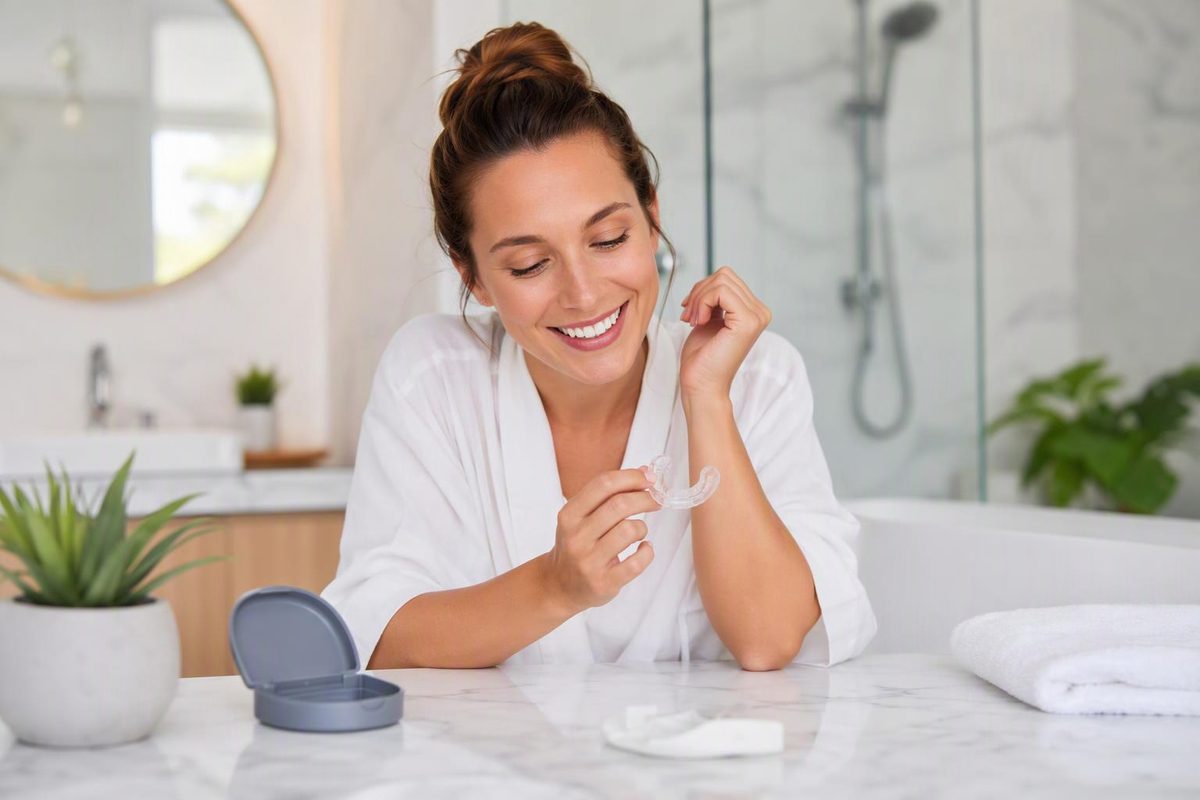
A custom mouth guard for grinding teeth—usually called a night guard or occlusal guard—separates the upper and lower teeth. Its main purpose is protection: reducing direct wear and damage to teeth and restorations.
It is not a guaranteed cure for bruxism. The National Institute of Dental and Craniofacial Research (NIDCR) says a guard prevents tooth damage and may reduce grinding-related muscle activity. Its guidance also lists behavior change, stress management and repair of damaged teeth among possible treatments (NIDCR). A Cochrane review likewise found insufficient evidence that splints reduce sleep bruxism itself, although they may help limit tooth wear (Cochrane).
When a dentist-made guard is worth considering
A professionally made appliance is easier to justify when an examination finds wear or damage that needs protection—especially when:
- You have crowns, veneers or extensive fillings.
- A store-bought guard will not stay in place or makes you gag.
- Your bite is complex, teeth are missing, or you use a removable dental appliance.
- You have morning jaw fatigue, tooth sensitivity or recurring fractures.
- You need a dentist to monitor whether damage is progressing.
Do not assume headaches or jaw pain prove that you grind your teeth. Infection, arthritis, injury, gum disease, sinus problems and temporomandibular disorders can also cause jaw pain (MouthHealthy).
A dentist may review your symptoms and health history, inspect the teeth and restorations, and check the jaw and face for pain or tenderness. A sleep study is not routine for everyone, but NIDCR lists it as a way to detect a suspected sleep-related disorder and measure nighttime muscle activity (NIDCR).
Mention loud snoring, witnessed pauses in breathing, gasping during sleep or marked daytime sleepiness before ordering a standard night guard. An appliance for obstructive sleep apnea is different: it supports the jaw in a forward position to help keep the airway open and is prescribed as part of sleep-apnea care (American Academy of Dental Sleep Medicine).
What “custom” should include
A dentist-made guard commonly involves:
- An examination. Tooth wear can have more than one cause, so the dentist should assess the pattern, symptoms and condition of existing dental work.
- An impression or digital scan. A laboratory or in-office system uses it to make an appliance for one arch.
- A selected design and material. Guards may be hard, soft or layered and may cover a full or partial arch. The choice should reflect the teeth, restorations, bite and treatment goal—not simply which material sounds strongest.
- A delivery appointment. The dentist checks retention, pressure points and how the opposing teeth contact the guard, then adjusts it.
- Follow-up when needed. The appliance should be reassessed if it rocks, hurts, comes loose, changes how the teeth meet or develops heavy wear.
Ask whether the quote includes the scan or impression, laboratory work, delivery adjustment, follow-up visits, storage case and remake policy. “Custom” from a mail-order company may mean the device is formed from your home impression, but it does not necessarily include an oral examination or an in-person bite adjustment.
Custom versus boil-and-bite
A dentist-made guard generally offers a closer fit and professional oversight, but evidence does not show that every custom appliance stops grinding better than every over-the-counter (OTC) product.
In one four-month randomized trial, adults using a particular boil-and-bite device had difficulty making it clinically acceptable. After corrections and dental oversight, adherence and most measured outcomes did not differ significantly from those with a custom Michigan splint, although the OTC group had more nighttime chewing-muscle bursts. The researchers concluded that the OTC device had potential but should be used with active dental oversight (randomized trial). The study involved one product and 61 adults who completed the trial; it excluded people with sleep apnea, periodontal disease, active orthodontics, removable prostheses and several other conditions.
| Option | Main advantage | Main limitation |
|---|---|---|
| Dentist-made custom guard | Examination, close fit, bite adjustment and follow-up | Higher initial price |
| Mail-order custom guard | Individualized shape at a lower advertised price | Usually no in-person examination or chairside adjustment |
| Boil-and-bite guard | Low-cost and readily available | Home fitting can be difficult; bulk and retention vary |
| Stock sports mouthguard | Easy to find | Designed for impact cushioning, not routine sleep use |
If you are considering an OTC guard, ask a dentist whether it is suitable for your teeth and restorations. Stop using it and arrange a fit check if it causes tooth pain, gum injury, worsening jaw symptoms or a bite change that persists after removal. Be especially cautious with an appliance that contacts or covers only a few teeth. A clinical review warns that prolonged use of splints without full coverage or balanced opposing contact can change the bite (review of occlusal splint designs).
What does a custom night guard cost?
There is no dependable single U.S. cash price. Geography, material, laboratory charges, provider type, included adjustments and insurance contracts all affect the bill.
Published fee schedules provide reference points, not national retail averages. A 2026 Kaiser Permanente Mid-Atlantic dental schedule lists plan-member fees of $365 with a participating general dentist and $561 with a specialist for a hard full-arch, soft full-arch or hard partial-arch guard (2026 fee schedule). A 2026 District of Columbia Medicaid schedule lists program payments of $500 for a hard full-arch guard, $250 for a soft full-arch guard and $300 for a hard partial-arch guard; Medicaid reimbursement is not a suggested cash price (DC fee schedule).
Before agreeing, request an itemized estimate and ask:
- Which appliance and arch are being proposed, and why?
- Is the examination billed separately?
- Are delivery and adjustment visits included?
- What happens if the guard cannot be worn comfortably?
- Is repair, relining or replacement covered by a warranty?
- Will planned crowns, implants or orthodontic treatment make it obsolete soon?
For insurance, ask the office which procedure code it expects to submit. Codes shown in current schedules include D9944 for a hard full-arch guard, D9945 for a soft full-arch guard and D9946 for a hard partial-arch guard. Coverage may still depend on diagnosis, documentation, age, frequency limits, network status and exclusions. For example, one 2026 Blue Cross and Blue Shield of Montana contract limits these guards to one in 12 months for covered members age 13 or older while separately excluding services related to temporomandibular joint dysfunction (plan contract).
Request a pretreatment estimate from your own plan, but remember that it is an estimate rather than a guarantee of payment.
Check the fit, not just the label
A usable guard should stay seated without constant clenching and should not have sharp edges or painful pressure points. Follow the dentist’s wearing and cleaning instructions rather than assuming all-day use is safe. Keep it away from heat and pets, and bring it to dental checkups so its fit and wear can be reviewed.
Contact the dentist if the appliance cracks, becomes loose, rubs the gums, causes new pain or leaves the bite feeling altered after removal. Arrange prompt dental care for a broken tooth, significant swelling, severe or worsening pain, or a jaw that locks. A guard may protect tooth surfaces, but it should not postpone diagnosis of the underlying problem.