
Choose a Brush That Removes Plaque Without Hard Scrubbing
Compare electric and manual plaque removal, choose useful brush features, and learn the technique that helps—plus when deposits need professional cleaning.
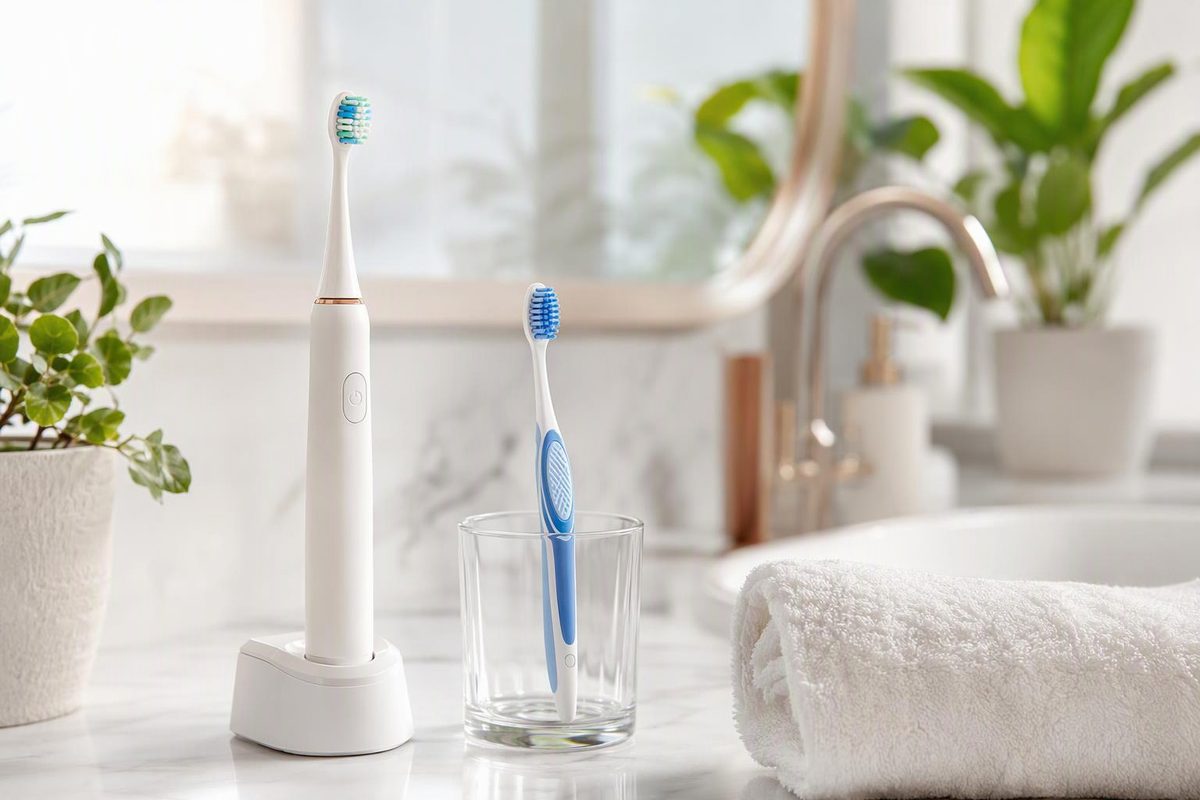
An electric toothbrush can remove soft dental plaque—the sticky film of bacteria on teeth. On average, powered brushes reduce plaque more than manual brushes, but either can work well with consistent, gentle brushing. An electric brush cannot remove hardened tartar; that needs professional cleaning. NIDCR explains the difference.
Choose your deposit type and brushing difficulties to see which features—or dental care—fit your situation.
Find Your Plaque-Control Priority
A Powered Brush Is Optional
For soft plaque, either a manual or electric brush can work well. If you switch, prioritize a soft head, a two-minute timer, comfortable handling and affordable replacement heads.
A pressure sensor is optional if you already brush gently.
No brush removes hardened tartar. Persistent bleeding, swollen or tender gums, chewing pain or loose teeth need dental assessment.
Sources: ADA toothbrush guidance; NIDCR oral-hygiene and gum-disease guidance; Oral Health Foundation electric-toothbrush guide. This is a feature guide, not a diagnosis or brand ranking.
For plaque control, prioritize a soft brush head, a two-minute timer, comfortable handling and replacement heads you can afford to keep buying. A pressure sensor is useful if you tend to press hard. The longest list of cleaning modes is not a reason to choose one handle over another.
Electric Brushes Reduce Plaque More On Average
A 2014 Cochrane review found that powered-brush users had plaque scores about 11% lower than manual-brush users after one to three months, and 21% lower after more than three months. Powered brushes also reduced gingivitis, meaning gum inflammation.
| Follow-Up In The Review | Plaque Scores Versus Manual Brushes |
|---|---|
| One to three months | About 11% lower |
| More than three months | About 21% lower |
Those figures describe differences in study plaque scores. They do not mean that an electric brush removes 11% or 21% of the plaque in your mouth, removes all plaque, or guarantees fewer cavities. They are comparisons between study groups, not a prediction of your personal result.
The review rated the evidence as moderate quality and found the long-term dental-health significance unclear. It supports a modest average advantage for powered brushing, not a promise that buying a particular handle will prevent future dental treatment.
An electric brush may be particularly useful if limited hand movement makes manual brushing difficult, or if you have braces. The American Dental Association (ADA) notes that these users may find powered brushes easier to use. Easier handling matters because the head still needs to reach the surfaces you intend to clean.
If you already clean thoroughly with a manual brush, switching is an option rather than a requirement. If brushing is awkward, rushed or difficult to control, consider whether the powered movement, timer or handle would address that specific problem. The useful comparison is not simply electric versus manual; it is which brush you can use gently and thoroughly every day.
Buy Features That Support Coverage And Gentle Pressure
A brush for plaque removal should help you reach teeth, spend enough time brushing and avoid excessive pressure. Judge the handle and replacement heads together rather than treating the handle purchase as the whole decision.
| Feature | What To Check | Buying Priority |
|---|---|---|
| Soft brush head | Comfortable positioning at back teeth | Essential |
| Two-minute timer | Clear signal when time is complete | Useful baseline |
| Pressure sensor | Warning when you press too hard | Useful for hard brushers |
| Comfortable handle | Easy to hold and guide | Essential fit check |
| Replacement heads | Ongoing price and availability | Check before buying |
| Extra modes or app | Whether they solve your problem | Optional |
A Soft Head Must Reach Your Back Teeth
Choose soft bristles and a head you can comfortably position around your back teeth. A head that feels awkward to place is a poor match even if the handle has appealing features. Focus on access to the outer, inner and chewing surfaces, not just how the brush feels against the front teeth.
Harder bristles are not the answer to stubborn deposits. If something remains attached after brushing, the next step is to establish whether it is missed soft plaque or hardened tartar—not to choose a harsher head or increase pressure.
A Timer Helps With Duration, Not Coverage
A two-minute timer helps you complete the recommended brushing time. Prompts at 30-second intervals can help divide attention across the mouth. These are practical aids, but they cannot confirm that the head contacted every surface.
A timer is most useful when you pair it with a repeatable route through the mouth. If you spend most of the cycle on easy-to-reach front teeth, reaching the end of the timer does not correct the missed areas. Coverage still depends on where you guide the head.
A Pressure Sensor Is Worth Considering For Hard Brushers
A pressure sensor warns you to ease off when you press too hard. It does not replace gentle technique, and it is not a reason to press until the warning activates. Let the powered movement do the work while you guide the head.
The Oral Health Foundation’s electric-toothbrush guide describes timers and pressure sensors as useful features. Extra modes and app connectivity are optional; a basic daily-clean mode is enough for most people. Buy an additional feature because it addresses a brushing difficulty, not because its name suggests more thorough cleaning.
Replacement Heads Determine The Ongoing Cost
Budget for roughly three or four replacement heads per year, plus batteries if required, in addition to the initial handle purchase. The ADA recommends replacing brushes about every three to four months, sooner if bristles become matted or frayed.
Before choosing a handle, check the price and availability of compatible soft heads. This article has no current model prices or replacement-head prices, so it cannot identify the cheapest brush to own. A low initial price alone does not establish a low ongoing cost.
The ADA’s Seal of Acceptance indicates that safety and plaque-removal evidence has been evaluated. It is not a ranking of which brush is best. Use it as an evidence check alongside head fit, handling and replacement costs—not as proof that one accepted brush will outperform every other option.
Oscillating-Rotating And Sonic Brushes Are Both Reasonable
An oscillating-rotating head turns back and forth; a sonic brush uses rapid vibrations. Both are reasonable options for plaque control. The available comparison does not justify treating every brush of one type as better than every brush of the other.
A 2022 systematic review found moderate-certainty evidence of a very small plaque-removal advantage for oscillating-rotating over high-frequency sonic brushes after a single brushing session in healthy adults.
That is a narrow finding: a single-session comparison in healthy adults, not a long-term result for every user or every model. It does not establish that replacing a comfortable sonic brush will improve your dental health. Nor does it identify the best current product at a given price.
If you are choosing your first powered brush, either mechanism is defensible. Compare the actual head size, handle and features you will use. If you already own a sonic brush and use it comfortably and thoroughly, this limited advantage is not a reason by itself to replace it.
Technique Still Determines Which Surfaces Get Cleaned
Follow your model’s instructions and any personalized advice from your dentist or hygienist. Powered movement does not remove the need to position the head correctly. The aim is to guide it across all tooth surfaces with gentle pressure, rather than scrub harder because the brush is electric.
- Brush twice daily for two minutes with fluoride toothpaste. Fluoride helps protect against decay; the brush removes plaque mechanically. These are different jobs, so choosing a powered brush does not replace fluoride toothpaste.
- Angle the bristles toward the gumline, generally around 45 degrees. Follow the positioning instructions for your particular head rather than assuming every model is used identically.
- Guide the head slowly from tooth to tooth. Let the powered movement do the work. Avoid adding vigorous manual scrubbing in an attempt to make the brush more effective.
- Clean the outer, inner and chewing surfaces. Work through a consistent route so that easy-to-reach surfaces do not receive all your attention. A running timer cannot tell you which surfaces you skipped.
- Clean between teeth daily. Use floss or another suitable interdental tool recommended by your dental professional. Electric brushing does not replace this separate step.
This routine follows Oral Health Foundation brushing guidance and NIDCR oral-hygiene advice. If your dental professional identifies an area you are missing, ask them to demonstrate how to reach it with your own type of brush head.
Use Disclosing Tablets To Find Missed Plaque
A plaque-disclosing tablet can make remaining plaque visible after brushing. Use it according to its instructions, then look at where plaque remains rather than judging cleaning only by how smooth your teeth feel.
NIDCR recommends this approach because plaque can be difficult to see. The value is specific feedback: it shows you where coverage needs attention. It is not a test of which brand has the strongest motor.
If the same areas repeatedly show remaining plaque, adjust the route or head position you use there. Aim for better coverage, not more pressure. If you cannot comfortably reach those surfaces, bring that problem to your dentist or hygienist rather than repeatedly changing cleaning modes.
Hardened Deposits And Persistent Symptoms Need Dental Assessment
A hard deposit that stays attached may be tartar. An electric brush cannot remove hardened tartar, even with a stronger setting or longer brushing. Do not try to remove it by pressing harder or scraping it yourself. Our guide to plaque and tartar on teeth explains what home cleaning can and cannot remove.
Appearance or feel alone may leave you unsure whether a deposit is soft plaque or tartar. If you cannot tell, ask a dental professional to identify it. Buying a new handle before that assessment may leave the actual problem unchanged.
Arrange a dental assessment for persistent gum bleeding, swollen or tender gums, pain while chewing, or loose teeth. These can be signs of gum disease, which needs assessment rather than another brush setting. NIDCR gum-disease guidance explains these warning signs.
At the visit, ask whether the deposit is soft plaque or tartar, which surfaces you are missing, and whether the professional can show you the right brush position and between-teeth tool for those areas. Those answers help distinguish a technique problem from a deposit that needs professional removal.
For soft plaque, a sensible purchase is a comfortable powered brush with soft heads, a two-minute timer and affordable replacements, adding a pressure sensor if you press hard. For hardened tartar or persistent gum symptoms, the next useful step is dental care—not a more expensive toothbrush.