
Brush Your Teeth for Two Minutes, Twice a Day
Aim for two minutes each time, twice a day. Learn why one minute falls short, how to pace your brushing, and why longer is not automatically better.
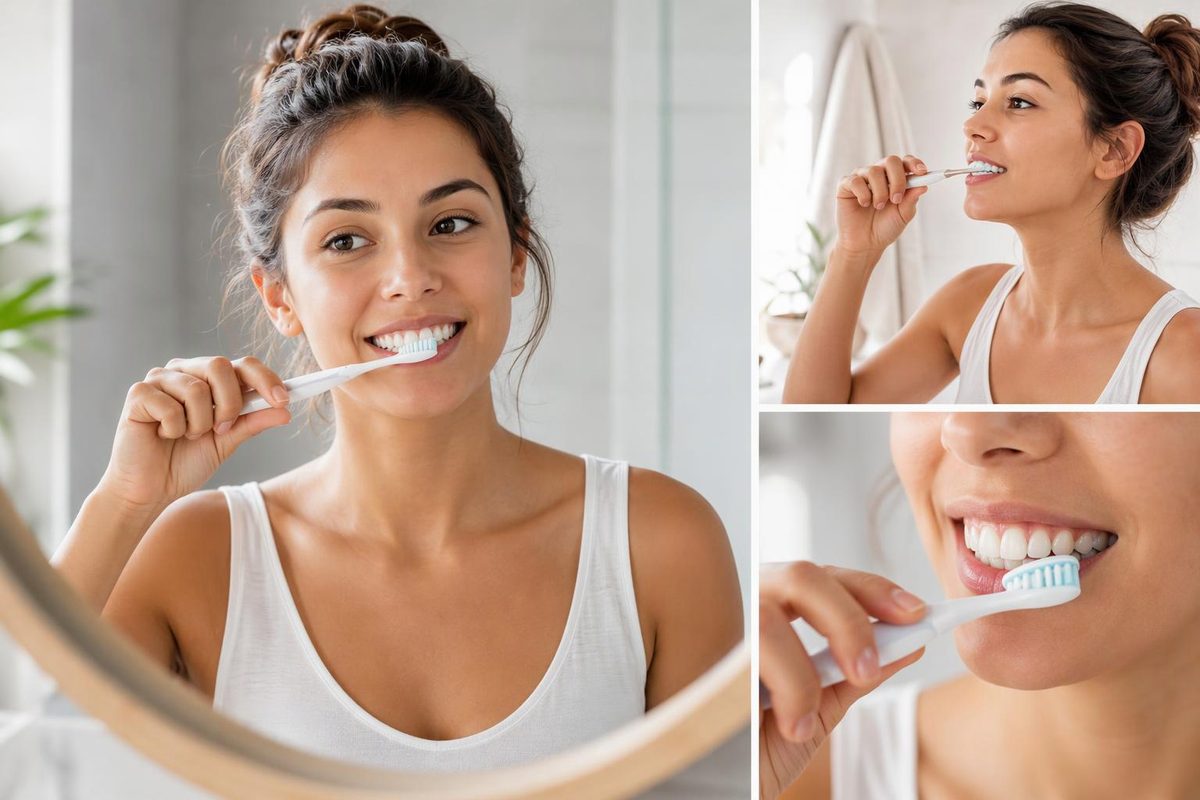
Brush for two minutes each time, twice a day—not two minutes total for the day. Use fluoride toothpaste and a soft-bristled toothbrush. The same time target applies whether your brush is manual or electric, according to the American Dental Association (ADA).
Brush once last thing before bed and on one other occasion during the day. The NHS recommends this schedule, while noting that your dental professional may give you individual advice.
Why two minutes instead of one?
A quick brush removes some plaque—the bacterial film on teeth—but two minutes generally removes more than one minute. A systematic review of five publications found greater plaque reduction with two-minute brushing for both manual and powered toothbrushes, with moderate certainty in the evidence.
Those studies involved adults and measured plaque after individual brushing sessions. They do not establish exactly how much your long-term cavity risk changes when you brush for one minute rather than two. The practical takeaway is narrower: one minute is not as effective a routine target for plaque removal.
Two minutes also needs to mean cleaning your whole mouth, not repeatedly brushing the easiest-to-reach front teeth.
A simple way to spend the two minutes
Set a two-minute timer rather than estimating. One practical way to distribute the time is to divide your mouth into four sections:
| Section | Time to aim for |
|---|---|
| Upper right | 30 seconds |
| Upper left | 30 seconds |
| Lower right | 30 seconds |
| Lower left | 30 seconds |
Within each section, clean the outside, inside and chewing surfaces. Thirty seconds is a pacing aid, not a reason to leave a surface unbrushed. Use the same route each time so you are less likely to skip a section.
For a manual brush, the ADA advises angling it about 45 degrees toward the gumline and using gentle, short strokes. Tilt it vertically to reach the inside surfaces of the front teeth. With either type of brush, use gentle pressure; reaching every surface matters alongside the time spent. These are part of the ADA’s brushing recommendations.
The timer is for brushing your teeth. Keep cleaning between your teeth as a separate daily step rather than counting it toward those two minutes; the ADA recommends daily between-teeth cleaning.
Is brushing longer better?
Treat two minutes as the standard routine target, not a maximum that requires you to stop halfway through an uncleaned area. But do not assume a five-minute session is automatically better, or try to make up for a short session by pressing harder.
The review comparing one and two minutes did not establish an ideal duration beyond two minutes. Gentle pressure and complete coverage remain important. If you consistently need much longer to reach everything—or have braces or difficulty controlling the brush—ask your dentist or hygienist: “Can you watch how I brush and show me which areas I’m missing?”
Helping children reach the target
The general two-minute, twice-daily recommendation also provides a routine for children. A timer can help with pacing, but it does not replace adult help: the NHS advises helping or supervising brushing until at least age seven.
For infants, start brushing as soon as the first tooth appears. The ADA advises caregivers to brush twice daily with a child-sized, soft-bristled brush and follow the child’s dentist’s instructions.